Work Here?
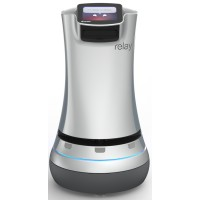
Relay Robotics develops autonomous mobile delivery and service robots for healthcare and hospitality. The robots run alongside people and perform tasks such as delivering pharmacy orders, blood products, and specimens in hospitals, and handling routine duties in hotels, using secure payload RFID scanning to ensure a complete chain of custody. It differentiates itself with secure, trackable deliveries, open-source software practices, and solutions tailored to healthcare and hospitality, while selling, leasing, and providing ongoing maintenance. The company aims to improve patient care, staff efficiency, and guest experiences, guided by values of respect, dignity, and teamwork.
Industries
Robotics & Automation
Industrial & Manufacturing
Enterprise Software
Healthcare
Company Size
11-50
Company Stage
Series A
Total Funding
$10M
Headquarters
San Jose, California
Founded
2013
People at Relay Robotics who can refer or advise you
Help us improve and share your feedback! Did you find this helpful?
Total Funding
$10M
Below
Industry Average
Funded Over
1 Rounds
Industry standards
BayCare expands autonomous hospital delivery with new Relay Robots at Winter Haven hospitals. The expanded robot fleet addresses the critical healthcare labor shortage by automating non-clinical logistics to prioritize nurse-to-patient bedside time Relay Robotics, a global leader in autonomous hospital delivery solutions, today announced the expansion of its partnership with BayCare Health System through the deployment of two new Relay Robots, "Stork" and "Miles," at Winter Haven Hospital and Winter Haven Women's Hospital. More headlines. Articles. This deployment adds to BayCare's growing fleet, supporting clinical care teams by automating the transport of lab specimens and medications and addressing the rising operational demands on staff. Building on the successful 2025 integration at St. Anthony's Hospital, this expansion formalizes BayCare's commitment to healthcare automation at scale as a real solution to the national nursing shortage. What This Means for Healthcare Operations The integration of autonomous delivery robots into hospital workflows directly mitigates staff burnout. By transitioning "delivery-runner" tasks to Relay Robots, hospitals can recover thousands of clinical hours annually. This shift allows nurses to practice at the top of their licenses, staying focused on critical patient outcomes rather than on logistical tasks. How It Works Relay Robots use advanced LiDAR and 3D computer vision to navigate complex hospital environments. Authorized users swipe a badge to load deliverables in the high-security, lockable bins, and then tell the robot where to go. The robots autonomously navigate the hospital, interacting with elevators, secure badge-access doors, and hallway traffic without human intervention. Key Capabilities & Use Cases Relay Robots are optimized for high-frequency, high-stakes hospital environments. Autonomous Lab Delivery: Stork (at Winter Haven Women's Hospital) manages 24/7 specimen transport from Urgent Care to the 2nd-floor laboratory. Medication & Supply Transport: Miles (at Winter Haven Hospital) bridges gaps in wings lacking pneumatic tube systems, delivering pharmacy orders and clinical supplies. Cross-Floor Navigation: Full integration with elevator systems to cover multi-floor facilities. What Makes Relay Robotics Different Reliability: Relay robots have over 99% delivery reliability and proprietary technology that enables the most reliable elevator navigation in the industry. Sterile-Ready Design: Contact-free operation and easy-to-sanitize surfaces for infection control. Infrastructure Light Navigation Guidance: Requires no physical tracks or facility modifications. Performance Metrics & Validation Operational Impact: Collectively, the Winter Haven robots are projected to complete 500+ deliveries per month. Nursing ROI: Estimated savings of 150+ clinical hours per month, collectively. Historical Success: The St. Anthony's 2025 pilot achieved a 99.8% delivery success rate across 50 deliveries per day. Frequently Asked Questions What are Relay Robots, and how do they work in hospitals? Relay Robots are autonomous delivery vehicles that transport lab specimens, medications, and supplies. They use sensors to avoid obstacles and can independently call elevators and open electronic doors to reach their destination. How do Relay Robots improve nursing efficiency? By handling routine transport tasks, the robots save each nurse significant time. Hospitals using Relay robots see average monthly time savings of over 150 hours - the equivalent of 15 10-hour shifts. This time is redirected to direct patient care, which is shown to improve nurse retention and patient safety. Can Relay Robots navigate elevators independently? Yes. Relay's proprietary software integrates directly with elevator controllers, allowing the robots to move between floors without human assistance. How do Relay Robots compare to pneumatic tube systems? Unlike tubes, Relay Robots can carry larger, fragile items (like certain blood products or large IV bags) that may not fit in the tubes or could be damaged by high-speed air transport. The robots also require much less physical disruption, including zero wall construction. What is the implementation timeline for a Relay Robot? A typical hospital deployment, including integration hardware work, floor mapping, and staff training, takes approximately 12 weeks; onsite install time is 1-2 weeks. Executive Perspective "BayCare is a high-authority partner who is committed to investing in innovation to improve operational and staffing challenges. Their experience with Relay robots validates the ROI we are seeing across the field, and now, with a full fleet of robots, they can deliver even greater impact to their care teams and patients. We are thrilled to support and share in their success." - Sultan Mehrabi, CEO, Relay Robotics About Relay Robotics Founded in 2013, Relay Robotics (formerly Savioke) is a leading supplier of autonomous service robots that work safely, securely, reliably, and contact-free alongside humans. Relay robots supplement staff across hospitality, healthcare, and commercial real estate settings and have completed more than 1,000,000 deliveries worldwide. They are deployed at major hotels such as Marriott, Hilton, Westin, Mandarin Oriental, and Radisson, as well as nationally recognized hospitals such as Johns Hopkins, HCA Healthcare, MedStar Georgetown, and Ochsner.
Relay Robotics - a provider of indoor robots mainly used in hotels and hospitals to deliver small items - is calling for the creation of a framework for indoor robots similar to that for autonomous road cars.
Brick Hospitality partners with Relay Robotics to deploy guest service Robots across all hotel properties.
In February 2023, Starship Technologies announced a partnership with Teal to offer unmatched connectivity and reliability for automated delivery robots.
According to a contemporary TechCrunch article, the robots, built by a company called Savioke (since acquired by Relay Robotics ) were "able to perform tasks in the front of the house and the back of the house, as well as navigate around guests and use elevators."
Find jobs on Simplify and start your career today
Industries
Robotics & Automation
Industrial & Manufacturing
Enterprise Software
Healthcare
Company Size
11-50
Company Stage
Series A
Total Funding
$10M
Headquarters
San Jose, California
Founded
2013
Find jobs on Simplify and start your career today
